Winter Purslane Soup / Soupe au pourpier d’hiver

Winter purslane is a winter salad close to mache, sorrel and spinach. It is eaten raw or cooked. It is part of the “Cretan diet”, which is often given as an example for its health benefits.

Winter purslane and its benefits

Winter purslane, picked from November to spring, brings “healthy” diversity to winter menus. I appreciate it more and more, both in terms of taste and healing.     

Winter purslane is rich in antioxidants. It protects against certain diseases (cardiovascular diseases are often cited) because it is very rich in vitamins A and C, mineral salts and Omega-3. It is the vegetable that contains these elements in greater quantities than any other vegetable.

Let’s cook winter purslane

Winter purslane, as mentioned above, can be eaten raw or cooked. Whether in salad, soup or mashed with potatoes, it goes perfectly with eggs, meats and fish particularly well. It can be prepared in juice, sauce, stuffing or simply blanched in salted water. You can make delicious omelettes, gratins, soups, fritters, salads, risottos and many other delicious dishes.

Today, during this cold, damp and gray Belgian period, I wanted to use it in a comforting soup version. Are you following me?

Winter Purslane Soup

For 1.5L, you need…

  • 1 onion, sliced
  • 2-3 stalks of celery with leaves, roughly chopped
  • 1 zucchini (250-270g), diced
  • 1 bay leaf
  • 150 to 300g market garden purslane, washed
  • 1.5L vegetable stock
  • salt, pepper

  1. In a saucepan, cook the sliced ​​onion and the cut celery with the bay leaf until the onion is translucent. Do not brown.
  2. Add the zucchini, mix and cook for a few minutes.
  3. Add the purslane, mix.
  4. Add the broth and bring to a boil then reduce the heat. Leave to simmer for 30 min.
  5. Remove the bay leaf and blend in a blender or immersion blender until you obtain a smooth soup. Adjust the seasoning.
  6. Serve immediately or store in an airtight container in the refrigerator (once cooled!) for 4-5 days.

In Health,

Chantal

Le pourpier d’hiver est une salade d’hiver proche de la mache, de l’oseille et de l’épinard. Il se mange cru ou cuit. Il fait partie du “régime crétois”, que l’on donne souvent en exemple pour ses bienfaits sur la santé.

Pourpier d’hiver et ses bienfaits

Le pourpier d’hiver est riche en antioxydant. Il protège contre certaines maladies (les maladies cardio-vasculaires sont souvent citées) parce qu’il est très riche en vitamines A et C, en sels minéraux et en oméga3. C’est le légume qui contient ces éléments en plus grosses quantités que n’importe quel autre légume.

Le pourpier d’hiver, cueilli de novembre au printemps, apporte de la diversité “santé” aux menus hivernaux. Je l’apprécie de plus en plus et ce tant au niveau gustatif que curatif.     

Cuisinons le pourpier d’hiver

Le pourpier d’hiver, comme précité, se consomme cru ou cuit. Que ce soit en salade, en soupe ou en purée avec de la pomme de terre, il accompagne parfaitement les œufs, les viandes et particulièrement bien les poissons. Il se prépare en jus, en sauce, en farce ou simplement blanchit dans de l’eau salée. On peut en faire de délicieuses omelettes, des gratins, des soupes, des beignets, des salades, des risottos et plein d’autres délicieux plats.

Aujourd’hui, en cette période froide, humide et grise Belge, j’avais envie de l’utiliser en version soupe réconfortante. Tu me suis?

Soupe au pourpier d’hiver

Pour 1,5L, tu as besoin de…

  • 1 oignon, émincé
  • 2-3 branches de céleri avec feuille, grossièrement haché
  • 1 courgette (250-270g), coupé en dés
  • 1 feuille de laurier
  • 150 à 300g pourpier maraîcher, lavé
  • 1,5L bouillon de légumes
  • sel, poivre

  1. Dans une casserole, faire cuire l’oignon émincé et le céleri coupé avec la feuille de laurier jusqu’à ce que l’oignon soit translucide. Ne pas faire brunir.
  2. Ajoutez la courgette, mélangez et faire revenir quelques minutes.
  3. Ajoutez le pourpier, mélangez.
  4. Ajoutez le bouillon et amenez à ébullition puis réduisez le feu. Laisser mijoter 30 min.
  5. Retirez la feuille de laurier et passez au mélangeur (blender) ou au mélangeur immersible jusqu’à obtention d’un potage lisse. Rectifier l’assaisonnement.
  6. Servir aussitôt ou conservez dans un contenant hermétique au réfrigérateur (une fois refroidi!) pendant 4-5 jours.

Santé!

Chantal

Cozy Autumn / Automne douillet

In the northern hemisphere, trees change colors to red, orange and yellow. It’s autumn, the season after the (hot) summer and before the (cold) winter. It rains more frequently and the temperature gradually cools down. The light is decreasing, the days are getting shorter. It’s the signal of the end of swimsuits and the beginning of big sweaters.

Douillet (FR), Cozy (EN), Hygge (DK), Ikigai (JP), Fjaka (HR)

It’s the time of year when we want cozy, cocooning and comfort. This feeling of comfort created by being with loved ones and friends in a warm environment accompanied by a fireplace, slippers, a blanket, a comforting meal and hot drinks.

Several countries have given a name to this moment of comfort. Douillet in French, Cozy in English, Hygge in Danish, Ikigai in Japanese, Fjaka in Croatian. There are slight variations from one place to another, but it is this feeling of comfort and communion that is common to all. Even if we don’t live it at the same time of the year (yes for some, it’s a constant way of life, all year round) we all need it.

In terms of cooking, the comfort meal is different for everyone depending on culture and habits, ingredients and cooking methods. For me, seasonal fruits and vegetables, in fact all seasonal foods, play into my concept of what is “comforting”.

Fall Foods

Seasonal “comforting” foods include game animals such as deer, fawn, partridge or wild boar. Fruits like apples, pears, persimmons, chestnuts, plums, walnuts and hazelnuts. And, vegetables such as squash, cabbage, Jerusalem artichokes and small salads such as wheat salad and watercress. There are so many! Also, the way I prepare them is also different in order to make them “comforting”.

Autumn cooking

So, in fall, I quietly change my cooking and baking style to reflect this need for comfort and warmth.

To prepare these foods, there are several types of dishes which are mainly made in fall or winter and which reflect the concept of comforting food. I’m thinking of gratins (cauliflower, Jerusalem artichoke, potato or celery root) of creamy soups (squash, mushrooms, parsnips) of risotto (mushrooms, chestnuts, pumpkin) and parmentier (lentils and nuts, game, mushrooms and beer)

The cooking methods are also different. There are more simmers in casseroles and smothered cooking such as pot-au-feu or tagine

In short, it’s the start of a cold season which requires new cozy recipes! So I’m in “comforting recipes” mode and my creativity is working for my and your taste buds! To follow and read in the coming weeks!

In the meantime, tell me what autumn is like for you? Is this a season you like? Do you feel the need for cozy and comfort food? What is comfort food for you? And, what are the ingredients that make it up?

In Health!

Chantal

Dans l’hémisphère nord, les arbres changent de couleurs pour le rouge, l’orange et le jaune. C’est l’automne, la saison qui se trouve après la saison chaude de l’été et avant la froide de l’hiver. Il y a de la pluie plus fréquemment et la température se refroidit progressivement. La luminosité baisse, les jours raccourcissent. C’est le signal de la fin du maillot de bain et du début des gros pulls.

Douillet(FR), Cozy (EN), Hygge (DK), Ikigai (JP), Fjaka (HR)

C’est le moment de l’année où l’on a envie de cozy, de cocooning et de réconfort. Ce sentiment de confort créé par le fait d’être avec ses proches et amis dans un environnement chaleureux accompagné d’un feu de foyer, de pentouffes, d’un plaid, d’un repas réconfortant et de boissons chaudes.

Plusieurs pays ont donné un nom à ce moment de réconfort. Douillet en français, Cozy en anglais, Hygge en danois, Ikigai en japonais, Fjaka en croate. Il y a de légères variations d’un endroit à l’autre mais, c’est ce sentiment de confort et de communion qui est commun à tous. Même si nous ne vivons pas celui-ci à la même période de l’année (oui pour certain, c’est un mode de vie constant, toute l’année) nous en avons tous besoin.

Sur le plan cuisine, le repas réconfortant est différent pour chacun selon la culture et les habitudes, les ingrédients et les modes de cuisson. Pour moi, les fruits et légumes de saison, en fait tous les aliments de saison, jouent sur ma conception de ce qui est “réconfortant”.

Les aliments d’automne

Les aliments de saison “réconfortant” incluent le gibier de chasse comme le chevreuil, le faon, la perdrix ou le sanglier. Les fruits comme les pommes, les poires, les kaki, les châtaignes, les prunes, les noix et les noisettes. Et, les légumes tels que les courges, les choux, les topinambours et les petites salades comme le blé, le cresson et la doucette. Il y en a tellement! Mais, la façon dont je les apprête est aussi différente afin de les rendre “réconfortants”.

La cuisine d’automne

Ainsi, en automne, je change tranquillement mon style de cuisine et de cuisson pour refléter ce besoin de réconfort et de chaleur.

Pour apprêter ces aliments, il existe plusieurs types de plats qui se font surtout en automne ou en hiver et qui reflètent bien le concept de réconfortant. Je pense aux gratins (chou-fleurs, topinambour, pomme de terre ou céleri-rave) aux potages crémeux et chaud (courge, champignons, panais) aux risotto (champignons, châtaignes, potiron) et aux parmentier (lentilles et noix, gibier, champignons et bière)

Les modes de cuisson aussi sont différents. Il y a plus de mijotés en cocotte et de cuissons à l’étouffé comme le pot-au-feu ou le tajine

Bref, c’est le début d’une saison froide qui nécessite de nouvelles recettes cozy! Je suis donc en mode “recettes réconfortantes” et ma créativité se fait aller pour mes et tes papilles gustatives! À suivre et à lire dans les semaines qui viennent!

En attendant, dis-moi comment c’est l’automne pour toi? Est-ce une saison qui te plaît? Ressens-tu le besoin de douillet et de plat réconfortant? C’est quoi un plat réconfortant pour toi? Et, Quels sont les ingrédients qui le composent?

Santé!

Chantal

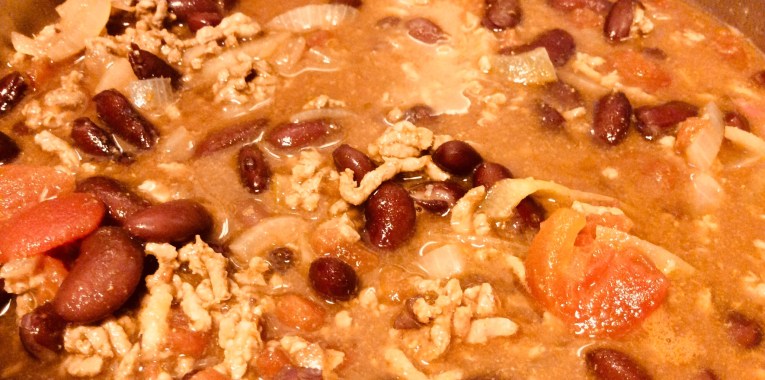
Chili Con Carne

This southern comfort stew is a staple in my kitchen.

I’m not like some aficionados and make it only with beaf and chili peppers.

Yes, I like to add other ingredients. I like to add onions, tomatoes, red beans, garlic, and sometimes… chocolate.

I like to play with the spices too. My classic recipe is with chili powder and cumin.

I love it spicy as well as mild.

I come from a family who do not eat chili nor spicy 🌶 hot food. I was brought up in Quebec, Canada which is quite far from southern U.S. but somehow, a bowl of hot chili is “comfort food ” for me.

Here is my basic recipe (from which I sometimes become creative and add stuff!)

The ingredients:

500g to 1kg ground grass-fed beef

2 onions, chopped

2 garlic cloves, minced

1 medium jalapeno chili, ribs and seeds removed, minced

7ml chili powder

10ml ground cumin

1-400ml can crushed tomatoes

400g cooked red kidney beans, drained and rinsed

This is how to prepare it:

Heat a heavy pot. Add the onions and cook about 5 minutes. Add the ground beef. Cook, stirring and breaking up meat, until browned.

Add the garlic and jalapeno. Stir in the chili powder and cumin. Continue to cook until fragrant, about 1 minute.

Stir in the crushed tomatoes. Simmer for about 30 minutes.

Add the beans and continue cooking, uncovered, until meat and beans are very tender, and chili is thick, about 30 minutes more. Serve in small bowls.

Do you like Chili? How do you like it? Please, let me know!

In health,

Chantal